Quick answer: Traditional Moroccan zellige combines clay preparation, shaping, drying, kiln firing, glazing and handwork. However, not every contemporary tile marketed as “zellige” follows an identical production sequence. The defining questions are which operations the workshop performs by hand, whether the tile is genuinely ceramic, and whether the finish and shape can be verified for the intended architectural project. This guide explains the process without pretending that Zellige Atelier operates its own kiln.
Research guide · Updated October 2026. Historical sources and supplier suitability are distinguished below; product availability must be verified separately.
Questions answered in this guide
- Where does zellige begin?
- How is the clay shaped and dried?
- When is the zellige tile glazed and fired?
- How are traditional geometric pieces cut by hand?
- Are modern square zellige and mosaic zellij the same?
- Why do tiles from one color family look different?
- How can an architect verify the making process?
Where does zellige begin?
It begins with a ceramic body formed from clay. Raw materials, refining methods and moisture content vary by workshop. Craftspeople prepare the clay so it can be shaped into tiles or blanks before drying and firing. The recipe matters because clay composition and firing affect porosity, size, color response and suitability. A project specification should identify the manufacturer and actual body rather than assuming every Moroccan tile has identical performance.
How is the clay shaped and dried?
Depending on the workshop and tile format, material can be shaped in traditional molds or other controlled methods. Drying must happen before kiln firing to reduce moisture. Uneven drying can produce warping or cracking; modest variations in handmade pieces are an aesthetic characteristic, but structural defects are a different matter. A supplier sample is the only responsible way to establish the expected surface and edge tolerances.
When is the zellige tile glazed and fired?
A ceramic glaze is applied and matured through firing, but the precise number of firings and sequence are not universal. Contemporary workshops may use different kilns and processes. Each glaze responds to heat, body and placement, which helps explain visual variation between tiles. Buyers should request a written finish description and samples from a real batch rather than rely on statements about a single supposedly universal firing method.
How are traditional geometric pieces cut by hand?
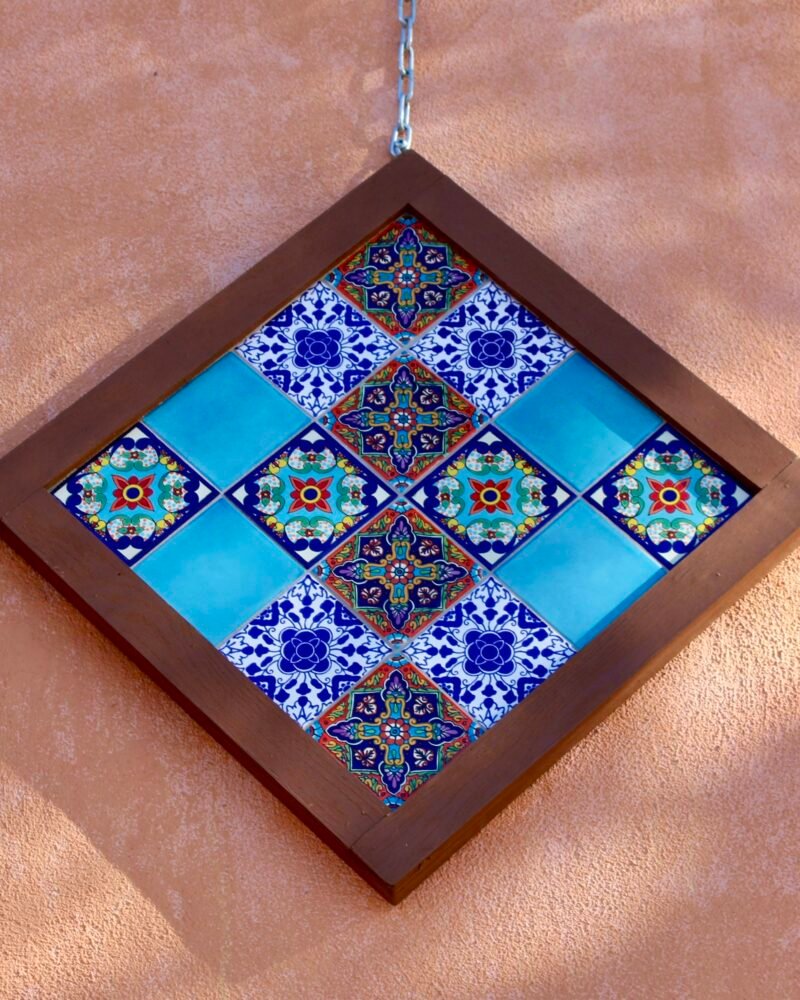
For hand-cut mosaic zellij, the artisan works individual glazed earthenware pieces into geometric units. Historic museum records describe motifs drawn and pieces carved using a mallet, with cuts on the clay beneath the glaze to create matching elements. Traditional patterns are assembled from carefully matched shapes. This is different from simply printing a geometric pattern onto a large factory tile.
Are modern square zellige and mosaic zellij the same?
They belong to related Moroccan ceramic traditions but serve different purposes. A single-color handmade square field tile is installed as a repeated surface. Traditional geometric zellij requires multiple hand-cut pieces arranged into a larger pattern, often with specialist labor. Ask which product is being supplied: individual field tiles, loose mosaic pieces, or pre-assembled panels. The installation method and quotation will differ.
Why do tiles from one color family look different?
Small differences in clay, glaze thickness, firing and surface geometry change how light reaches the eye. A white glaze may read cream in warm light, while a green glaze may shift from olive to teal across pieces. Variation can make the result richer, but a buyer should still approve a representative sample board and an acceptable tonal range before placing a production order.
How can an architect verify the making process?
Request dated workshop photographs or video, a named supplier, dimensions, thickness, glaze or finish notes, representative samples, care information and a written quotation. If floor performance or wet-area suitability matters, ask for supporting technical documentation. Zellige Atelier is a sourcing intermediary: we identify potential workshops after receiving a project brief and do not certify a process before verifying that supplier.
Historical and technical sources
The linked institutional or editorial records support the specific historical or technical points. They do not verify a prospective supplier’s inventory.
Continue your research
Planning a project? Request a project-specific sourcing quote. We verify the workshop and sample after your enquiry; no stock, price or lead time is guaranteed by this article.