Quick answer: No single advertised thickness or tolerance covers all handmade Moroccan zellige. Clay composition, forming, hand cutting and format may affect the finished tile. Architects should request measured samples with a written tolerance range, then confirm bedding, transitions, substrate and finished-surface expectations with the installer.
Editorial guide prepared October 2026. Material options are sourcing enquiries until a real workshop confirms origin, technical performance, stock and quote. Read official linked sources for technical/historical context.
Questions answered in this guide
Does all authentic Moroccan zellige have the same thickness?
No. Even genuine handmade ceramics can differ from workshop to workshop, and within an agreed production range. Square field tiles, small cut mosaic pieces and rectangular bejmat may use different forming and finishing methods. Ask the actual selected supplier for the nominal and measured sample range; never transfer one retailer’s measurement to a different concept.
Why do some zellige faces look uneven?
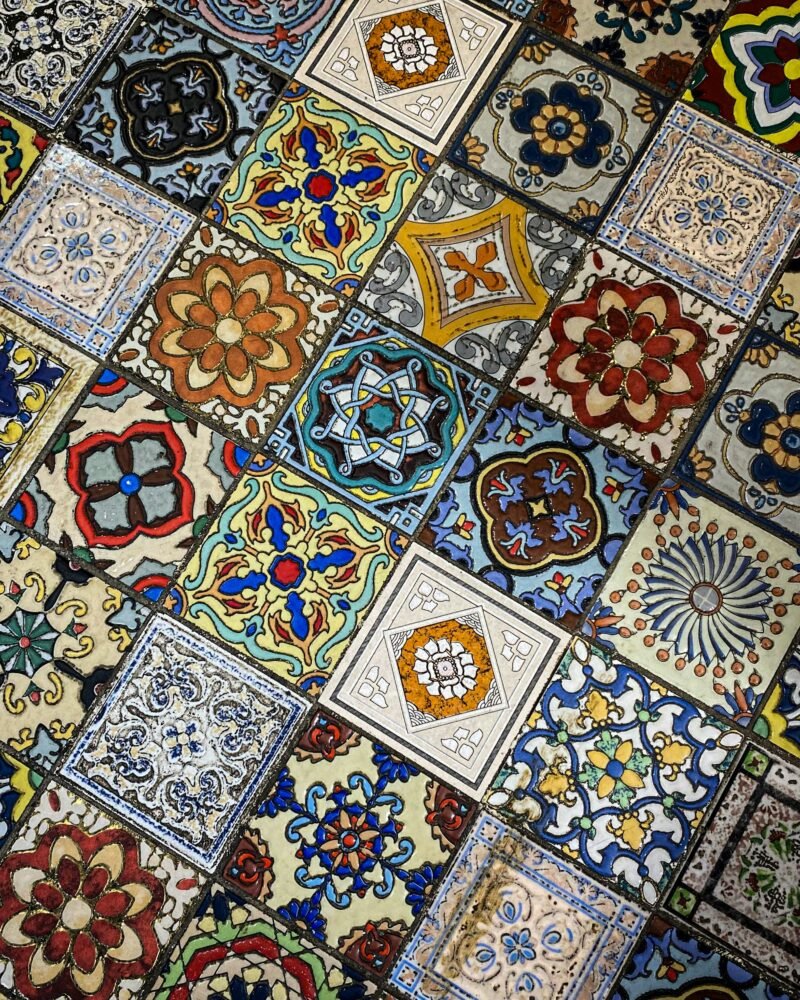
Ceramic craft, glaze pooling and hand-finishing may create variations in reflection, surface plane and the perception of depth. The acceptability of variation depends on how the material is specified. Visual character is not permission to disregard lippage or safety at walking surfaces. The installation team should inspect and approve a representative sample panel.
What is the difference between nominal and actual tile size?
A nominal label, such as 10 × 10 cm or 4 × 4 in, identifies a general size category. Actual pieces may vary, and the installation’s face module also includes joints. Drawings should state whether the number indicates the supplied piece, the intended module or a critical clear opening. This prevents dimensional surprises at fixtures and corners.
What is lippage, and why does it matter?
Lippage describes differences in elevation between adjacent finished tile edges. A hand-finished glazed field may have intentional surface irregularities, but step changes can still affect appearance, cleaning, accessibility and foot safety. Acceptable practice must be determined by the actual tile, local requirements and industry installation standards; a product photograph cannot establish a safe threshold.
How does thickness affect tile transitions?
The final assembly includes the ceramic thickness plus the selected setting-bed method and any waterproofing or underlayment. At doors, countertops, floor drains and existing finishes, a few millimeters of combined difference can matter. Provide the contractor the actual tile and method data early and detail movement and edge transitions before ordering.
Is machine-cut tile always more consistent?
Manufacturing method may influence regularity, but there is no trustworthy blanket rule for every maker. Instead of relying on a story, inspect a statistically representative sample, measured dimensions, edge profile and documented acceptance criteria. A zellige-look factory tile may be visually even yet not an authentic Moroccan handmade product.
Do grout joints hide uneven thickness?
Joint design can influence how tile edges read visually, but grout is not a substitute for appropriate substrate preparation and setting technique. TCNA warns that voids under tile can cause failure and that grout joints are not waterproof. Handmade appearance should be achieved within a properly engineered assembly and approved mock-up.
What should a specification schedule contain?
Specify supplier and batch, color and format reference, sample dimensions, acceptable thickness/warpage range, edge treatment, application, required test data, joint and movement details and who approves the field mock-up. Where values are unknown, mark ‘supplier to confirm’ instead of inventing precision. See our architect guide.
Sources and supporting references
The institutional sources below are general standards or history, not evidence that a particular unverified catalogue concept has passed tests or is stocked.
Continue your project
See our full Zellige FAQ library, the Tile Finder, the 500-reference catalogue overview and request a supplier-verified quote. No stock, supplier, price, performance or delivery promise should be inferred from editorial imagery.